
Neuro-Linguistic Programming is an evolving study that constantly develops. New ways of coaching, smarter strategies in sales and, improving your day-to-day life. Mind Tools continuously updates its knowledge by attending training with Dr. Richard Bandler and the Society of NLP.

Below you find our archives of articles and blogposts about Neuro-Linguistic Programming. As NLP evolves, so do the articles which we update frequently with the latest findings and the newest approaches. 

mindtools personal development neuro linguistic programming nlp milton model commentary adjectives and adverbs
Commentary Adjectives and Adverbs
Mind Tools Co., Ltd.

Commentary Adjectives and Adverbs

We have gone over Adjectives and Adverbs in our previous blogposts. So that may not be any difficulty anymore. Now, in specific we are coming to Commentary Adjectives and Adverbs. Before you continue to read, we want you to know that the examples we are going to provide you proudly contain several kinds of presuppositions.. And combining all the techniques learnt will make it only more powerfull than you could imagine. Practice these examples and come up with your own. The more you practice, the more you become perfect in it. That is the goal we are aiming for.

Read More »
mindtools personal development neuro linguistic programming nlp milton model nlp conversational postulates
Indirect Elicitation Patterns
Mind Tools Co., Ltd.

NLP Conversational Postulates

Did someone ever asked you something like “Do you know what time it is.”? And you told them the exact time? Welcome to NLP Conversational Postulates. The most logical answer to this question is either Yes or No. Conversational Postulates typically elicit a response, rather than a literal answer. So, can you give me some more examples of Conversational Postulates now? I think you can. It depends rather now on if you provide a response or a literal answer. Are you reading this?

Read More »
mindtools personal development neuro linguistic programming nlp milton model adverbs and adjectives
Adverbs and Adjectives
Mind Tools Co., Ltd.

Adverbs and Adjectives

Adverbs and Adjectives presuppose that something is going to happen. Adverbs and adjectives add information to a verb (doing word) or noun (naming word) respectively. If I were to say “Johnny is running quickly”, “quickly” would be the adverb as it is adding more detail or qualifying the verb “to run”. The question is how will the experience be? That is the question, you, as an NLP Practitioner needs to investigate. Adverbs and Adjectives is a wonderful part of the Milton Model that helps you do your work easier and quicker. It only needs some planning. For you to experience the information below.

Read More »
mind tools personal development neuro linguistic programming nlp milton model generalization nlp universal quantifiers
Inverse of the Meta Model
Mind Tools Co., Ltd.

Universal Quantifiers

Words such as all, every, always, nobody, etc. are Universal Quantifiers. Universal Quantifiers usually indicate overgeneralization. Remember we are in the land of, Trance, Hypnosis and the Milton Model. So the usage of Universal Quantifiers should be applied in such a way. Where the Meta Model learns us to reveal deleted, distorted or generalized information, here we are going to use Universal Quantifiers to be specifically vague and provide the listener ways that produce trance as well as other outcomes. Every word you are reading here can assist you in going deeper and deeper into a beautiful trance. And so should we utilize Universal Quantifiers.

Read More »
mindtools personal development neuro linguistic programming nlp milton model change of time verbs and adverbs
Change of Time Verbs and Adverbs
Mind Tools Co., Ltd.

Change of Time Verbs and Adverbs

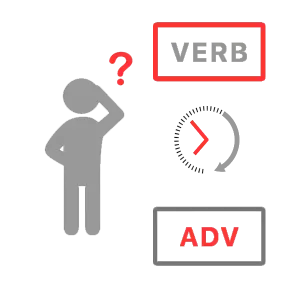
Change of Time Verbs and Adverbs is a great article about helping you deeper understand the concept of presuppositions and the Milton Model. It helps you to quickly and easily change the perception of your client. In proper use of it, you are able to provide some kind of an embedded command to your client. It helps you presuppose something by using Change of Time Verbs and Adverbs. Take the following example: “You can continue to relax.”. It presupposes that you are already relaxing. Another one: “Are you still interested in doing business?”. It presupposes that you were at some point interested in doing business with me. Now we have provided you some examples already, let’s take a closer look on how to apply this technique. Here we go!

Read More »
mind tools personal development neuro linguistic programming nlp meta programs
Meta Programs
Mind Tools Co., Ltd.

NLP Meta Programs

In NLP Meta Programs are a process by which one sorts through multiple generalizations simultaneously. As such, Meta Programs control how and when a person will engage in any set of strategies in a given context. Here are key take aways for you:

Read More »
mind tools personal development neuro linguistic programming nlp milton model nlp distortion nlp lost performative
Inverse of the Meta Model
Mind Tools Co., Ltd.

Lost Performative

Lost Performative are Evaluative statements. The person making the evaluation is missing (lost) from the sentence is called Lost Performative. Lost Performatives can be a very effective way of delivering presuppositions. We will work this out in our example section.

Read More »
mindtools personal development neuro linguistic programming nlp milton model indirect elicitation patterns
Indirect Elicitation Patterns
Mind Tools Co., Ltd.

NLP Indirect Elicitation Patterns

Indirect Elicitation Patterns are very useful in getting specific responses indirectly, without asking for them. Again, in the Meta Model we scope for information that is sent to us as the listener to be as complete as possible. The Milton Model is the opposite of it. In other words we as an NLP Practitioner or Master Practitioner plan our outcome very well. Where Direct Elicitation can result in much resitance or authority, in NLP Indirect Elicitation Patterns help you soften the communication. Using them results in a desired response indirectly. In other words, you are asking for an outcome without making it obvious that you are asking and there is a desired outcome. Fun, right?

Read More »
mindtools personal development neuro linguistic programming nlp meta model nlp distortion nlp complex equivalence
Distortion
Mind Tools Co., Ltd.

NLP Complex Equivalence

What is NLP Complex Equivalence?
In NLP Complex Equivalence is a conclusion. It bases itself on a static belief that gives some conditions. The outcome will always be the same. NLP suggests that this is a close view of potential possibilities. It provides opportunities for learning, growth and change. Often, complex equivalences are used in the process to chunk up (or generalising) inappropriately. To make summary judgments that do not apply as widely as a person is implying.

Read More »
mindtools personal development neuro linguistic programming nlp milton model analogue marking
Indirect Elicitation Patterns
Mind Tools Co., Ltd.

NLP Analogue Marking

In NLP Analogue Marking doesn’t have to do much with language patterns, but the more how you use your voice. In our experience it doesn’t hurt to become fully in control of your voice as it makes you bring our message to your client more easy and more smooth. A lot of the techniques we explained in previous blogposts are even more powerful when you apply Analogue Marking. Analogue Marking means that you set the directive apart from the rest or the sentence with some non-verbal analogue behavior.

Read More »

We are proud to be the first NLP institute in Thailand that has two Licensed Neuro-Linguistic Practitioner Master Trainers and two Licensed NLP Trainers. With the team of four highly skilled and knowledgable trainers you are assured of quality NLP Trainings.

Mind Tools provides NLP Practitioner and NLP Master Practitioner Trainings and Certifications. We educate you according to the renowned, latest and highest standards set by the Society of NLP. We will train you thoroughly in all the corners of Neuro-Linguistic Programming and some extras we learned from Dr. Richard Bandler directly.

We use cookies

We use cookies to improve your experience on this website. You may choose which types of cookies to allow and change your preferences at any time. Disabling cookies may impact your experience on this website. You can learn more by viewing our Cookie Policy.

Our Licensed NLP Practitioner Training starts in:

Days
Hours
Minutes
Seconds